Summary: For high-risk pregnancy care in Texas, top clinics include Texas Children’s Pavilion for Women in Houston, UT Southwestern Medical Center in Dallas-Fort Worth, UT Physicians in Greater Houston, Baylor Scott & White Health across North and Central Texas, Dell Medical School in Austin, and independent specialists like Holy Cross OBGYN in Mesquite. These clinics offer specialized maternal-fetal medicine services, ensuring comprehensive care for complex pregnancies.
Some pregnancies in the United States bring complications that push expectant parents out of standard prenatal visits and into specialty maternal-fetal medicine clinics. Choosing a high-risk pregnancy OB/GYN clinic in Texas starts with accepting that care usually comes from a group, not a single doctor. Your primary obstetrician still matters, but specialists take over the pieces involving complex maternal and fetal conditions. That shift can feel heavy when a pregnancy is labeled high-risk, and getting support early helps with both the medical work and the anxiety that comes with it.
Clinic Directory is a free US healthcare directory for patients and caregivers, with no account required. It lets people sort clinics by city and state, specialty, insurance, services, language, and listed capabilities such as telehealth or online booking. Patients can read clinic profiles, contact providers, and follow links to the provider's own booking system. Clinic Directory does not schedule appointments, take deposits, provide treatment, or give medical advice. ClinAds is a full-service, AI-accelerated marketing agency for dental, dermatology, med spa, vision, and multi-location clinics. The firm runs done-for-you campaigns so clinics are easier to find for patients searching for specialized care.
1. Texas Children's Pavilion for Women: best at specialized fetal centers
Texas Children's Pavilion for Women in Houston serves as a main hub for high-risk pregnancy care, with access to nationally recognized fetal and newborn centers. This clinic fits families who need advanced, multi-disciplinary co-management for complex fetal conditions, heart disease, or multiple pregnancies. Specialists at these locations work directly with your primary OB/GYN, so routine prenatal care can hand off cleanly to specialized maternal-fetal medicine, or MFM, interventions when needed. Patients also have access to a broad network of community clinics across Houston, Lufkin, and Austin, which keeps high-risk pregnancy monitoring closer to home (Texas Children's, 2023).
The Pavilion's team approach brings together fetal imaging, genetic counseling, and neonatal specialists. That matters when a pregnancy brings severe health concerns or signs that are still developing. Because the center is research-driven, patients often have access to newer diagnostic tools, including advanced fetal MRI and ultrasound protocols.
2. UT Southwestern Medical Center: best at academic-led maternal care
UT Southwestern Medical Center provides high-risk pregnancy care across the Dallas-Fort Worth area, including several locations such as Las Colinas, Irving, and Plano. UT Southwestern fits patients who want care grounded in academic medicine, where OB/GYN experts work alongside maternal-fetal medicine specialists who manage chronic conditions like gestational diabetes and preeclampsia (UT Southwestern Medical Center, 2023). Its standing as a top hospital for obstetric and gynecological care gives patients access to prenatal testing and support services, including free educational classes.
The coordinated care model at UT Southwestern keeps your maternity team staffed with nurses and obstetricians who have substantial experience with complex medical comorbidities during pregnancy. Patients can check whether these clinics accept their insurance by looking at the clinic's online profile or calling the scheduling department directly. The system also provides strong prenatal genetic counseling for people with abnormal screenings or a family history of genetic disorders, so the diagnostic and support pieces stay connected.
3. UT Physicians Maternal-Fetal Medicine: best at Greater Houston coverage
UT Physicians runs several specialized MFM centers across the Greater Houston area, with sites in Friendswood, Katy, Memorial City, and Sugar Land (UT Physicians, 2023). Expectant mothers who need steady access to specialized care and do not want to drive to the central Texas Medical Center for every visit fit this model well. The clinics cover a broad set of advanced services: prenatal testing, NIPT, amniocentesis, and focused programs for conditions such as placenta accreta.
At UT Physicians, the team works side by side with your primary obstetrician, so pregnancy-related anxiety and medical complications are handled together rather than in separate silos. Because the network has multiple sites across the metro area, patients can fit frequent ultrasound checks and diagnostic visits around work or home obligations without much trouble. Each center is built to provide high-level maternal-fetal medicine services that speak to the clinical and emotional needs of women facing high-risk pregnancies.
4. Baylor Scott & White Health: best at widespread regional access
Baylor Scott & White Health runs maternal-fetal medicine clinics across North and Central Texas, with major centers in Fort Worth, Dallas, and Waco. Patients who want the security of a large network and who need high-risk pregnancy services no matter which city they live in often look here after an OB/GYN referral (Baylor Scott & White Health, 2023). The Baylor Scott & White model addresses maternal and fetal needs with advanced tools, including 3D sonograms, chorionic villus sampling, and percutaneous umbilical blood sampling.
The scale of the network matters for people who may need to move between sites for different tests or specialist visits. High-risk pregnancies bring plenty of anxiety, and the coordinated work of these MFM specialists with your regular OB/GYN gives patients a more organized setting. Their website and patient portals help people find a location nearby, but phone confirmation still matters for new-patient openings and for specific high-risk services.
5. Dell Medical School Division of Maternal-Fetal Medicine: best at research-integrated care
The Division of Maternal-Fetal Medicine at Dell Medical School in Austin offers consultative high-risk obstetrics care through a distinctive partnership with UT Health Austin, Ascension Seton, and CommUnityCare Health Centers (Dell Medical School, 2023). Patients who want care where clinical research and direct medical treatment meet will find this clinic especially relevant, particularly for fetal disease or difficult obstetric complications.
The division also takes teaching seriously, so patients often receive care shaped by evidence-based protocols. In Austin, ambulatory services cover a range of needs, from genetic testing and counseling to diabetes management and advanced obstetrical ultrasound. That setup helps inpatient and outpatient consultation flow together more smoothly, and if a complication comes up, the move to hospital care is already built into the plan. People searching for particular providers in this system can use the Ascension Medical Group Seton Women's Health network, which includes experienced specialists such as Dr. Kobina D. Ghartey and Dr. George A. Macones.
6. Local Independent High-Risk Specialists: best at personalized, focused monitoring
Independent practices such as Holy Cross OBGYN in Mesquite, Texas, and solo-led offices run by Dr. Roberto Prieto-Harris in McAllen offer a smaller, more personal setting for high-risk monitoring (Holy Cross OBGYN, 2023). Patients who want the same physician involved throughout their high-risk care often prefer these clinics. They may lack the broad infrastructure of an academic medical center, but these clinicians still bring deep experience with common high-risk triggers like advanced maternal age, a history of miscarriage, and chronic health conditions.
Choosing an independent specialist does not mean giving up quality, because these doctors often work with local hospital systems for advanced imaging and delivery services.
Patients in these practices also tend to value the chance to book online or speak directly with office staff, which cuts down on the administrative load that often comes with larger hospital systems. This advice does not fit pregnancies with rare, severe fetal anomalies or critical, life-threatening maternal cardiac or surgical conditions. Those cases call for the intensive, round-the-clock multidisciplinary capabilities found only at major academic-affiliated hospitals like the ones listed earlier.
How to coordinate care with your MFM clinic
Patients usually end up carrying the load of getting a primary obstetrician and a maternal-fetal medicine specialist on the same page, and the details matter more than they seem. Before the first visit, have your primary doctor send over ultrasound images, blood work, and your basic medical history. Many women keep a paper folder, or phone scans, with current prescriptions, insurance papers, and notes about why their regular doctor sent them for high-risk monitoring.
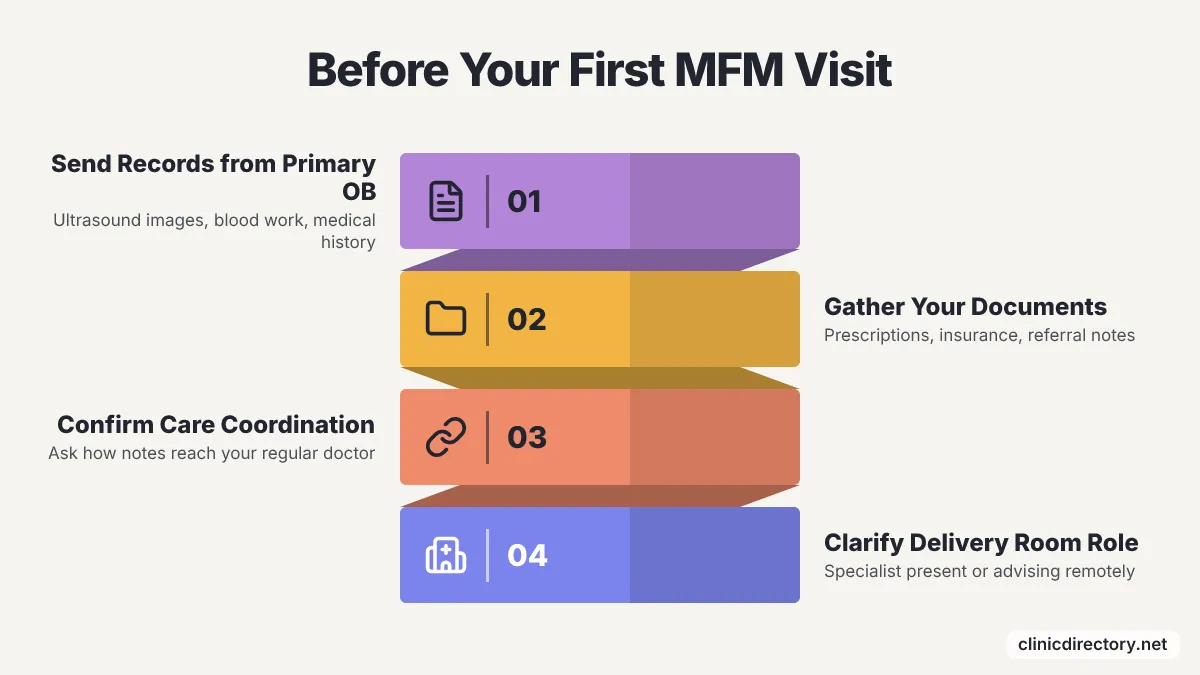
When you meet the MFM team, ask how visit notes get back to your obstetrician. A lot of practices send records through an integrated Electronic Medical Record system, but it still helps to confirm that those records actually reach your regular doctor's office, so everyone stays aligned across specialty scans. You also want to know whether the specialist will be present in the delivery room or only advising from a distance, because that detail tells you who is handling birth day.
| Clinic System | Primary Focus | Best For |
|---|---|---|
| Texas Children's Pavilion | Advanced fetal centers | Complex multi-disciplinary care |
| UT Southwestern | Academic medicine | Chronic condition management |
| UT Physicians | Regional MFM network | Consistent Greater Houston access |
| Baylor Scott & White | Widespread regional access | Continuity of care in North/Central TX |
| Dell Medical School (Austin) | Research-integrated MFM | Fetal disease and difficult obstetric complications |
| Local independent specialists | Personalized monitoring | Same physician throughout high-risk care |
How to get started with high-risk pregnancy care in Texas
Getting started with high-risk pregnancy care in Texas begins with a direct phone call to your regular obstetrician to ask which local MFM groups or health systems they already share cases with. That conversation matters, because high-risk practices almost always want a formal physician order before they place anyone on the schedule. Once you have those names, check your health plan's directory to confirm coverage and ask for an intake appointment.
The specialist's intake staff will want your full prenatal chart and background medical files well before you arrive, so the doctor has time to review your case. Getting the paperwork lined up early keeps you out of the waiting room with missing charts and leaves the appointment free for your actual pregnancy plan. Use the clinic's main appointment lines or patient intake pages to arrange that first evaluation.
When to seek urgent care during a high-risk pregnancy
A scheduled MFM appointment is not the place for urgent symptoms. If you have heavy vaginal bleeding, a severe headache or vision changes, severe abdominal pain, fluid leaking, or your baby is moving much less than usual, call your obstetrician right away or go to the nearest emergency room instead of waiting for your next clinic visit.
Frequently Asked Questions
What are the top high-risk pregnancy clinics in Texas?
The top high-risk pregnancy clinics in Texas include Texas Children’s Pavilion for Women in Houston, UT Southwestern Medical Center in Dallas-Fort Worth, UT Physicians in Greater Houston, Baylor Scott & White Health across North and Central Texas, Dell Medical School in Austin, and independent specialists like Holy Cross OBGYN in Mesquite.
What services does Texas Children’s Pavilion for Women offer for high-risk pregnancies?
Texas Children’s Pavilion for Women provides specialized maternal-fetal medicine services, including advanced fetal imaging, genetic counseling, and neonatal care. The clinic is known for its research-driven approach, offering access to newer diagnostic tools like advanced fetal MRI and ultrasound protocols, particularly for complex fetal conditions and multiple pregnancies.
How does UT Southwestern Medical Center support high-risk pregnancies?
UT Southwestern Medical Center offers high-risk pregnancy care grounded in academic medicine. It provides prenatal testing, support services, and free educational classes. The center specializes in managing chronic conditions such as gestational diabetes and preeclampsia, with a coordinated care model that includes experienced nurses and obstetricians.
What makes Baylor Scott & White Health suitable for high-risk pregnancy care?
Baylor Scott & White Health suits patients who need high-risk pregnancy services across North and Central Texas. The network offers advanced tools like 3D sonograms and chorionic villus sampling. Its large network allows patients to move between sites for different tests or specialist visits, ensuring coordinated care with their regular OB/GYN.
Why choose an independent high-risk specialist like Holy Cross OBGYN?
Independent specialists like Holy Cross OBGYN in Mesquite offer a more personal setting for high-risk monitoring. Patients often prefer these clinics for consistent physician involvement throughout their care. While they may lack the infrastructure of larger centers, they provide deep experience with common high-risk triggers and collaborate with local hospitals for advanced services.
Recommended resource
Sources
- Maternal Fetal Medicine Center Locations | Texas Children's
- Maternal Fetal Medicine | Texas Children's
- Maternal-Fetal Medicine Centers in Houston | UT Physicians
- Hospital and Clinic Locations: High-Risk Pregnancy | UT Southwestern Medical Center
- Division of Maternal-Fetal Medicine
- Maternal Fetal Medicine | Baylor Scott & White Health