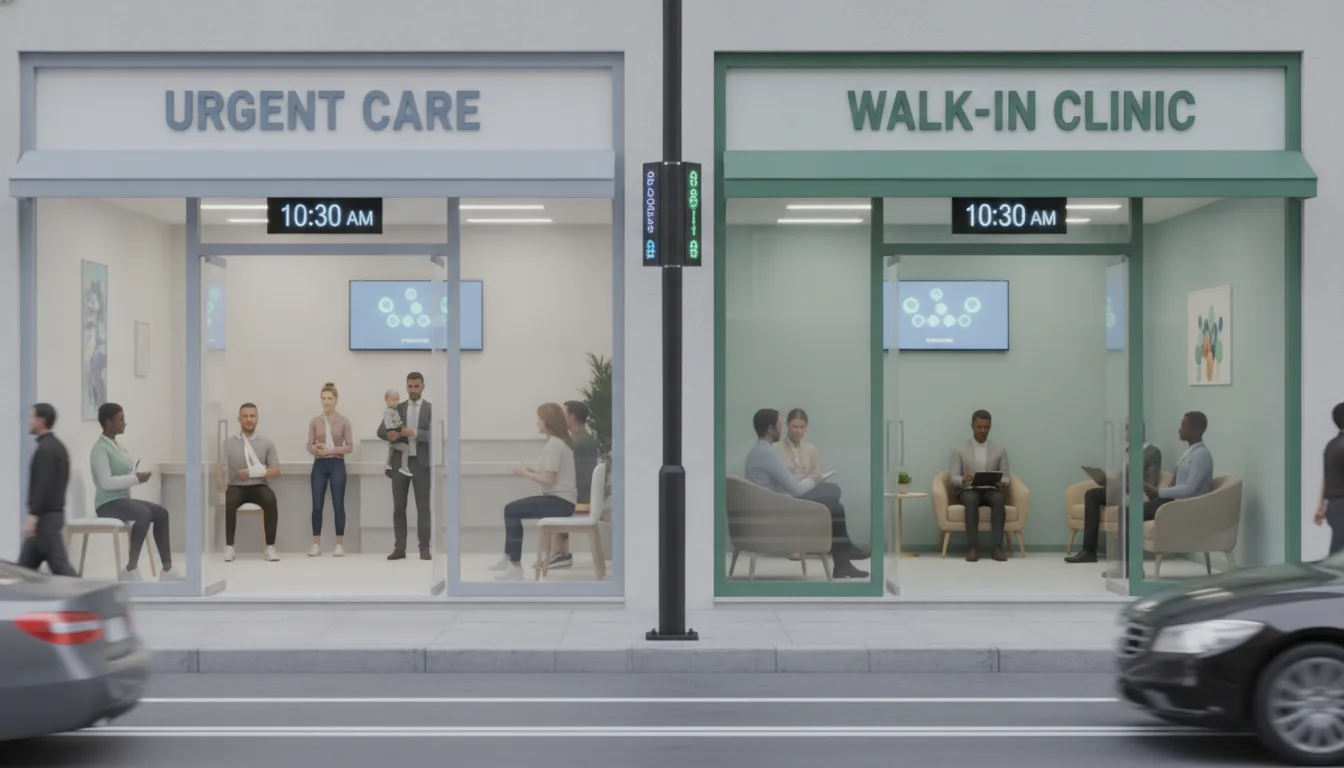
Summary: Typically, you do not need an appointment for urgent care, making it a convenient option for sudden health issues. Urgent care centers are designed to offer quick access to medical attention for non-life-threatening conditions. However, during peak times, wait times may vary, so checking in advance or using online check-in options can help minimize waiting.
Nearly 4,244 urgent care clinics are spread across 1,263 cities in the U.S., giving many people a nearby place to go for care. Still, it can be hard to know when urgent care makes sense and when a walk-in clinic is enough. With health insurance premiums rising in 2026, choosing the right place matters even more. This guide lays out the tradeoffs so you can pick the clinic that fits the problem in front of you.
Key Takeaways
- Urgent care flexibility: These centers often take patients without a scheduled visit, which helps when an issue shows up out of nowhere.
- Walk-in convenience: Walk-in clinics let people get seen without booking ahead, which works well for small, routine problems.
- Insurance considerations: Rising health insurance premiums in 2026 may change which option makes more sense for your budget.
- Service differences: Urgent care centers usually handle a wider range of services than walk-in clinics do.
- Cost factors: Knowing how the prices differ can make it easier to keep medical bills under control.
At a Glance
| Option | Appointment Needed | Typical Services Offered | Insurance Coverage |
|---|---|---|---|
| Urgent Care | Not usually | X-rays, lab tests, minor injuries | Most major plans |
| Walk-In Clinic | Not required | Minor illnesses, vaccinations | Varies by provider |
What is the difference between urgent care and walk-in clinics?
Urgent care centers and walk-in clinics both give people a way to get medical help without setting up a visit first, but they are not the same. Urgent care is set up for more serious problems like fractures, and it can handle testing such as X-rays and lab work. Walk-in clinics, which are often inside retail stores, focus on minor illnesses and preventive care like vaccinations. Knowing where each one fits helps you choose based on the problem and how quickly it needs attention.
Urgent care fills the space between the emergency room and a primary care doctor. It can handle issues that need prompt treatment but are not life-threatening, such as sprains, small fractures, and infections. Many of these centers stay open later, which helps after regular office hours. Walk-in clinics are usually staffed by nurse practitioners or physician assistants, and they work well for colds, flu, and small skin problems. You’ll often find them in pharmacies or retail stores, which makes them easy to reach when you need something simple and quick.
Do you need an appointment for urgent care?
Most of the time, you do not need an appointment for urgent care, which is one reason people use it for sudden health problems. These centers are set up to give fast medical attention for conditions that are not life-threatening. Even so, waits can grow long when the clinic is busy, so calling ahead or using online check-in can save time.
That flexibility is a big part of the appeal. Many urgent care centers stay open in the evenings and on weekends, which helps people who cannot get to their primary care doctor during the workday. Online check-in is also showing up more and more, and it lets patients hold a place in line before they arrive. That can cut down on waiting, especially when the lobby is full. Some urgent care centers do take appointments, and they do it to keep patient flow moving. Among the 3,261 rated listings, the median rating is 4.2, which points to a generally positive response from patients.
How do rising health insurance premiums in 2026 affect clinic choices?
As health insurance premiums climb in 2026, people start paying closer attention to the bill before they ever step into a clinic. That shift changes how they look at urgent care and walk-in visits. Coverage can differ. So can the amount owed at the desk. If you know what your plan covers, the choice gets a lot less hazy.
Families and single patients alike are trying to keep medical costs under control without sacrificing care. Urgent care centers usually take most major insurance plans, which makes them a better fit for people with solid coverage. Walk-in clinics can make more sense for minor problems when the plan has a high deductible or thin benefits. Read the policy. Check the copays. Compare the usual price of the same visit in both settings. One more note, 36% of the 3,261 listings that carry a rating are rated 4.5 or higher, which says something about patient experience.
How to choose between urgent care and walk-in clinics?
The choice turns on the problem in front of you, the insurance card in your wallet, and what the visit is likely to cost. If the issue needs tests or a more involved exam, urgent care is the safer bet. If it is a minor illness or a routine shot, a walk-in clinic can save money. Check the services first. Check the plan too.
The details matter. Dehydration, a moderate asthma flare, or a small cut that may need stitches fits urgent care better. A sore throat, an ear infection, or a flu shot usually fits a walk-in clinic. Network status matters as well, because out-of-network care can get expensive fast. Some clinics post prices for common visits, which helps when you are trying to stay inside a budget. The median rated listing has 196 reviews, so half of the 3,261 fall below that number. That spread points to very mixed patient experiences.
How do urgent care and walk-in clinics handle pediatric care?
Both kinds of clinic can treat children, but they do not all do the same job. Urgent care centers often have the staff and equipment for a wider set of pediatric problems, from small injuries to common illnesses. Walk-in clinics can handle things like colds and rashes, yet they may fall short when the case gets more serious.
Parents run into this question after hours, when the pediatrician’s office is closed and a child still needs help. A sprain, a cut that may need stitches, or another injury can fit urgent care well. These centers are usually staffed by clinicians who work with children and know how to treat them. Walk-in clinics work fine for quick vaccine visits or minor illness, but you should make sure they accept pediatric cases before you go. Some limit the ages they see. Some keep their pediatric services narrow. A phone call ahead of time saves a lot of guesswork. According to Pediatrics - UT Health Tyler, urgent care centers often have the necessary staff and equipment to handle a wide range of pediatric issues.
What are the cost considerations for urgent care and walk-in clinics?
Cost matters when people compare urgent care with walk-in clinics. Urgent care centers usually charge more, since they can do more, and they have the diagnostics to match. Walk-in clinics tend to cost less, so they can make sense for minor problems when you want care without a big bill.
Urgent care clinics usually ask for higher fees because they can deal with more complicated problems and keep X-ray machines and labs on-site. That setup fits cases that need prompt attention, but do not rise to an emergency room visit. Walk-in clinics, which are often inside retail stores, stick to basic care and prevention, and that narrower scope helps keep prices down. You also have to think about the price at the desk and what insurance might pay back later. A quick check with your insurer about both kinds of facilities can spare you a surprise charge and help you choose with a clearer budget in mind. According to Florida Atlantic Medical Group - Primary Care, understanding the cost differences between urgent care and walk-in clinics can help manage medical expenses effectively.
Conclusion
Picking the right place for care means looking at your symptoms, your insurance, and what urgent care and walk-in clinics actually provide. Health insurance premiums keep rising in 2026, so knowing the difference can help keep medical spending under control. Resources like the Free Clinic Ad Compliance Checker can help you find a clinic that is compliant and dependable.
Frequently Asked Questions
Do you need an appointment for urgent care?
No, urgent care clinics generally do not require appointments. They are set up for quick care when the problem is not life-threatening. Still, checking in online or calling ahead can cut down the wait if the place is busy.
What services do walk-in clinics offer?
Walk-in clinics usually handle minor illnesses, vaccines, and preventive care. They work well for fast, non-emergency needs, and you can walk in without booking ahead.
How do rising health insurance premiums impact my clinic choice?
Higher premiums in 2026 can push patients toward lower-cost options like walk-in clinics for small problems, while urgent care may still be the better fit when you need broader services. Check your coverage so you know what you might owe out of pocket.
What should I consider when choosing between urgent care and walk-in clinics?
Think about how serious the problem is, what services are available, and what your insurance will cover. Urgent care fits more serious cases, while walk-in clinics work well for minor issues and preventive care.
How can I verify a clinic's services and insurance coverage?
Use resources like the Free Patient Review Request Kit to read feedback on clinics, then confirm services and insurance details by calling them or checking their online profiles.
Recommended resource
Related reading
- How Sliding Scale Clinics Work for Uninsured Patients
- Navigating Social Media Reviews for Clinics
- Healthcare Market Research: Key Strategies for 2026
- Primary Care Operational Challenges Analysis 2026
Sources
- Clinads (healthcare startup)
- Indiana Maternal Mortality Review Committee - 09/23/2026
- Pediatric Urgent Care in Anaheim | Walk-In Clinic